March of Dimes Hosts March for Babies

** The following article was previously published in Quo Vadis on April 10, 2015 **


The March of Dimes will be hosting an event titled “March for Babies” on Sunday April 26 at 9 a.m. at Johnson Park in Piscataway. The reason, according to their website, marchforbabies.org, is so they can give hope to nearly half a million babies born too soon each year by raising money to help fund research and programs to find answers to problems babies have today.

The March for Babies event raises money to help fund research that will to find what causes problems in babies. According to bestofnj.com, “March for Babies is the March of Dimes premier fundraising event. It supports research and other programs nationwide and in our community to help babies born healthy and those who need help to survive and thrive.” The beginning days of a baby’s life can be crucial, which is why March for Babies is a great way to have a form of preventative care and also care after birth.
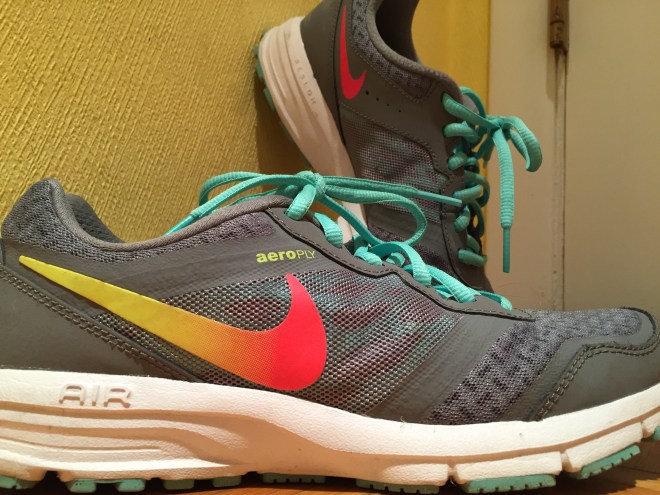
sneaker-picture
March through scenic Johnson Park while raising awareness for an important cause. (Photo courtesy Hannah Fakhrzadeh)

One issue March for Babies deals with is premature birth. According to the Mayo Clinic’s website, mayoclinic.org, “A premature birth is a birth that takes place more than three weeks before the baby is due.” They go on to say, “Premature birth gives the baby less time to develop in the womb. Premature babies, especially those born earliest, often have complicated medical problems.” Premature birth can cause a plethora of issues which include: heart conditions, cleft lip, lung problems, spine issues and also eye problems.

March of Dimes and March for Babies have so far been successful because, according to the March for Babies website, “More than 500 local programs were supported to help educate women and reduce risks during pregnancy. Comfort and information was offered to 90,000 families with a newborn in intensive care through March of Dimes NICU Family Support. Your involvement also helped the U.S. premature birth rate drop for the seventh year in a row.”

Those who are interested or would like to make a donation can visit www.marchforbabies.org. Emails can be sent to NJ637@marchofdimes.org and calls can be made to 732-952-9010. According to the March for Babies website, their goal is to raise $356,000 and as of March 29, they have raised a total of $107,492.

** The following article was previously published in Quo Vadis on April 10, 2015 **

Sammy’s Hope Animal Welfare and Adoption Center will Host a Grand Opening for their Sayreville Location

**  The following article was previously published in Quo Vadis on February 16, 2015 **


Sammy’s Hope, an animal welfare and adoption center, will host a grand opening next to the Sayreville Animal Hospital on Feb. 26 at 4:30 p.m. to help reduce the amount of homeless animals in the Middlesex County area.

Sammy’s Hope is an animal welfare organization that formed in September of 2010. It all started when dedicated adult volunteers would go to municipal shelters to socialize the homeless animals that were there.

Hubbard mentioned that they concentrated on long-stay animals. When asked what kind of breed was most common, Hubbard said, “Pit bulls were common long-stay animals because of the misconceptions about them.” She went on to say, “With proper training, they could be great family pets.”

On their website you will see their logo, which is the face of a Pit bull; Pit bulls are perceived by some as a “vicious breed”. Pit bull owner, Nicolle Centrella, described her Pit bull, Nala, as “the friendliest dog she has ever known”.

“Nala was thrown out with her sister on a really cold and snowy night,” Centrella said, describing how Nala, like many other Pit bulls, was abandoned. “Luckily, Nala and her sister survived and my friend found them just in time. He told me about both dogs and I immediately told him that I would take one of them, which turned out to be Nala. She was so cute and she was so happy when I got her.”

photo-3
Although Nala had a rough start, she is enjoying life with her loving family. (Photo courtesy Hannah Fakhrzadeh)

The “Pit bull” breeds are well-known in dog-fighting rings. On www.NJSPCA.org, Col. Frank Rizzo, chief law enforcement officer for the New Jersey SPCA, says, “This is a business. It’s gang-related. Pit bulls are viewed by their owners as prizefighters and the ones that lose are discarded like trash.”

“Sammy’s Hope was named after a big Pit-bull brindle mix named Sammy, who had a deceiving face, but was a teddy bear at heart,” Hubbard said, sharing the story behind the adoption center’s name. “Sammy was the first to get fostered and soon after being fostered, he was adopted into a loving and happy home down by the beach.”

The founding members of Sammy’s Hope thought Sammy exemplified what their mission was all about. Sammy’s Hope is dedicated to trying to find loving and forever homes for the animals they continue to care for.

Sammy’s Hope doesn’t only help dogs; they also make great efforts in finding cats loving homes, too.

“We converted dog kennels into cat kennels,” Hubbard explained. “We have music, enrichment activities and volunteers that come in to socialize with the cats.”

Sammy’s Hope Animal Welfare and Adoption Center opened on Jan. 12. The facility is “small and controllable”, according to Hubbard, who went on to say, “We only have one employee and about 65-70 volunteers who come in on shifts to help out with the animals.”

“The grand opening for the Sammy’s Hope Animal Welfare and Adoption Center in Sayreville is set for Feb. 26 at 4:30 p.m.,” according to Nj.com, which goes on to say “The new facility will serve the needs of homeless animals in the Middlesex County area.”

The new adoption center is located on 1400 Main St. in Sayreville, NJ next to Sayrebrook Animal Hospital.

To volunteer with Sammy’s Hope, go to www.sammyshope.org, or e-mail volunteers@sammyshope.org.

**  The following article was previously published in Quo Vadis on February 16, 2015 **

The College Holds the December College Assembly with the Help of the Faculty and Students

**The following article was previously published in Quo Vadis on February 8, 2015**


Faculty and students got together for the College Assembly meeting in the Rose M. Channing Danziz Amphitheater of L’Hommedieu Hall on Thursday, December 4, 2014 at 2 p.m. to discuss aspects of the College that needed to be revised, changed or added; the members of the College Assembly made the necessary revisions by getting input from the faculty and students who were present for the meeting.

At the meeting, many things were discussed ranging from new classes being added to adding a new degree option. For those interested in a Global Studies A.A. Degree, there is now the option to choose that degree here at the College. During the College Assembly, the Media Arts & Design A.A.S. Degree was revised.

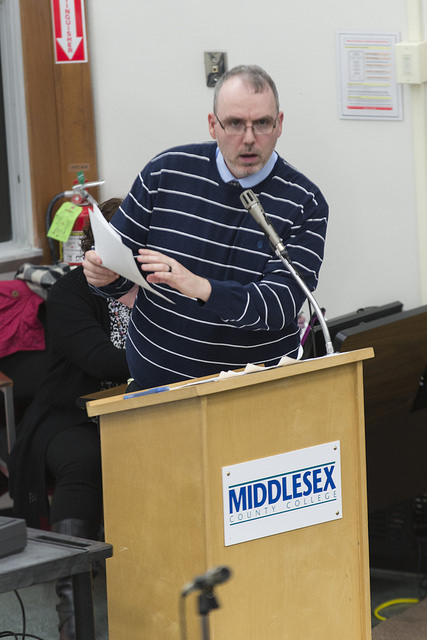
college-assembly-photo
A new Global Studies A.A. Degree was added to the College during the College Assembly Meeting (Photo Courtesy of Rob Rivera/NPPA)

Three new courses have been added to The College. They are all go along with the Accelerated Learning Program (ALP) model, which is helpful to students yearning to achieve the academic status they need. When responding to student, E. Villapiano’s questions regarding the statistics that support the Accelerated Learning Program (ALP) model, Professor Nester responded by stating, “Research at Columbia University suggests the ALP model is a very dynamic and effective way to get students to achieve the status that they need to get to college level classes.” Professor Nester went on to say, “Assessment of the ALP pilot program here at MCC suggests that, at the completion of the semester, many students in the ENG 010 ALP course outperform ENG 121 placed students.”

The three courses, which are reading and English classes, are proven to be beneficial to students. At the assembly, Professor Spano and Professor Winchester, who are both instructors in the pilot ENG ALP courses here at the College, spoke positively about the successes in the program. Professor Nester clarified for Professor Blanco by saying, “traditional ENG 121 placed students receive a traditional ENG 121 even if in the class with ALP students”. He continued to clarify by saying, “the assessments have shown that the ALP students in the mixed ENG 121 class performed better, in many cases, than the traditionally placed ENG 121 students in the same class, not that the traditionally placed ENG 121 students performed better than their counterparts in homogeneous ENG 121 classes.”

Also during the assembly, there were course description changes made for two classes. These changes were made to the ENG 121 class and also the ENG 122 class. Both class description changes had to do with minor wording changes. At the assembly, Veronica Clinton, Executive Director of the Middlesex County College Foundation, spoke to the assembly regarding the upcoming 50th Anniversary Gala. The Gala is to be held on campus on April 28, 2015. Veronica Clinton also encouraged attendance to the gala. Tickets are $200 per person with the fundraising goal set at $165,000; so far, $48,000 has been raised to date. There is a maximum of 300 seats available and anyone interested in the 50th Anniversary Gala can contact foundation@middlesexcc.edu for more information. The next meeting of the College Assembly will be held on Thursday, February 5, 2015 at 2:00 PM.

**The following article was previously published in Quo Vadis on February 8, 2015**

Warm Weather Begins to Move into Middlesex County

**The following article was originally published in The Signal on April 25, 2015** 


Middlesex County residents can enjoy the numerous benefits of the spring weather now that the weather has warmed up all over the county. It is now the time that residents of the county finally come out of the hibernation they were under due to the extreme winter weather.

Signs of spring have peeped through all over the county. As you walk through the College, signs of spring can be seen. People in t-shirts, no winter jackets and the temperatures in the 60s are all signs that winter is now in the past. The beauty that comes with spring is not the only benefit, spring has health benefits as well.

There are multiple health benefits that come with spring, like more physical activity, spring gardening and even fresher produce. As the weather warms up, more people choose to do activities outside rather than staying inside and doing things like watching TV or playing video games.

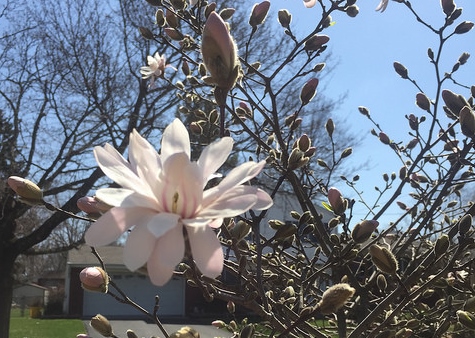
warm-weather-picture
A flower blooming on a tree is the first sign of spring. (Photo Courtesy of Hannah Fakhrzadeh)

Spending time outside can also lead to more Vitamin D, which can come directly from the Sun. According to the Mayo Clinic’s website, mayoclinic.org, “Vitamin D is found in many foods, including fish, eggs, fortified milk, and cod liver oil. The sun also adds to the body’s daily production of vitamin D, and as little as 10 minutes of exposure is thought to prevent deficiency.”

Proper exposure to the Sun can be extremely beneficial for treating diseases like cancer. Pulitzer Prize-winning news source, theguardian.com, says, “Vitamin D deficiency has been inconclusively linked to numerous conditions, including breast, bowel, lung and prostate cancers, heart disease, type 2 diabetes, dementia and rheumatoid arthritis.”

The spring weather can also increase positive moods, said Haley Cafarella, a student here at the College; “The warmer weather is also beneficial because everyone seems to be in a better mood now that winter is over.” The spring weather also allows more people to enjoy the outdoors on campus. Cafarella expressed her love for spring saying, “I love the fact that the weather is warmer because I can wear lighter clothes and eat lunch outside when I’m on campus.” The spring weather will hopefully last long enough for it to be enjoyed. Students are encouraged to get outside and enjoy all that nature has to offer.

**The following article was originally published in The Signal on April 25, 2015** 

Cigerette Purchasing Age Raising from 18 to 21

**The following article was originally published in Quo Vadis on May 16, 2015**


Localities in our area are raising the cigarette-buying age to 21 to emphasize the benefits of not smoking. The age limit to purchase all tobacco products and electronic cigarettes are being increased.

The harmful effects of smoking can be seen almost everywhere one goes.  Lung cancer, rotting teeth and mouth cancer is amongst the many problems smoking can cause. According to the Centers for Disease Control and Prevention (CDC), cigarette smoking causes more than 480,000 deaths each year in the United States. This is about one in five deaths. They go on to say, “Smoking causes more deaths each year than all of these combined: Human immunodeficiency virus (HIV), Illegal drug use, Alcohol use, Motor vehicle injuries and Firearm-related incidents.”

cigarrette-picture
Cigarettes will soon be harder to purchase for those under 21. (Photo Courtesy of Hannah Fakhrzadeh)

This is why many areas in our county are taking a stand and raising the cigarette-buying age to 21. According to an article posted on nj.com, “Highland Park is joining a recent trend of towns in New Jersey and nationwide that have taken it upon themselves to ban tobacco sales to people under 21. In Middlesex County, Sayreville has also raised the cigarette buying age.”

Tara Canavera, a Highland Park resident and student at the College, doesn’t agree with this movement and says, “If a person is 18 and legal to die for your freedom, then that person should be able to buy what is legal to get at 18 everywhere else. Many people in Highland Park who support the ban called me and another person opposed to this right-wingers and friends of the tobacco lobby.” She goes on to say, “I am not a right-winger, or friend of the tobacco lobby. I am an American citizen who is sick of our rights slowly being taken from us by the government at all levels.” Jeff Wertz, another resident of Highland Park, agrees with this decision and says, “I don’t see it as rights being taken away. I see it as a values issue, this move reflects the values of Highland Park.”

**The following article was originally published in Quo Vadis on May 16, 2015**

Was Winter Storm Juno Really a Blizzard?

**The following article was originally published in Quo Vadis on January 29, 2015**


Winter Storm Juno, the recent snowfall that touched down on January 26, 2015 in the Middlesex County area was predicted to be a record snowfall because of  the amount of snow that was supposed to be received.

Preparations for this snowfall caused citizens to go out shopping for any last minute items that were needed. Throughout social media and also some news channels it can be seen that store shelves were being emptied by those worried. A recent post on Facebook that came from a concerned shopper stated, “Oh boy…. no bread, no eggs and no juice…seriously…let’s hope there’s some milk left.”

The Middlesex County area was predicted to get one to two feet of snow. Many news channels were predicting it to be a “blizzard”, but when the snow stopped it was far from a blizzard. In reality, the Middlesex County area only got about 7-8 inches.

Towns were even going so far as to contacting the residents and notifying them of the snowstorm and how to prepare and stay safe. The East Brunswick Township sent out recordings warning the residents about the snowfall and reminding them to clear the roads so that the plows could get through.

winter-storm-juno-picture
Worried shoppers empty shelves in preparation for the snowfall. (Photo Courtesy of Hannah Fakhrzadeh)

As is expected when a storm like Juno hits, there were many school closures and early dismissals. On 26 Jan., The College took the necessary steps to close the campus early at 12:30 p.m. to ensure the students have a safe drive back home, later deciding to keep the campus closed on 27 Jan. because of the snowfall that was happening; The College was reopened on 28 Jan.. Winter Storm Juno is the first early dismissal and school closure of the spring semester for The College.

Winter Storm Juno was expected to be bad and almost blizzard-like which caused government offices to take early precautions. On nj.gov it stated, “With Winter Storm Juno expected to impede transportation and travel throughout New Jersey, Governor Chris Christie today declared a State of Emergency, authorizing the State Director of Emergency Management to activate and coordinate the preparation, response and recovery efforts for the storm with all county and municipal emergency operations and governmental agencies.”

Mohammad Zadeh of the Lawn Salon Landscaping Company in the Middlesex County area said, “The forecast was not quite on target I guess due to the vast size of the storm, but it did come through in some northern states.” When asked if he believed that Winter Storm Juno was a “blizzard” he stated, “It was not a blizzard in New Jersey, but it had the length of time of a blizzard… the snow flakes were smaller and less affective.”

Although Juno wasn’t as big as predicted, The Lawn Salon was out as soon as the snow started. When asked how long it took to clean up the snow, Zadeh stated that, “We started 10 p.m. Monday and we are still cleaning some parking spots that were occupied during the storm. It’s Wednesday, 2:30 p.m. now.” Companies like The Lawn Salon Landscaping Company have worked long hours to ensure that the roads were safe to travel on again.

**The following article was originally published in Quo Vadis on January 29, 2015**

Choir shares stage with tsunami survivors

**This article was originally published in The Signal on April 5, 2016**


The College’s choir had the opportunity to sing alongside Japanese tsunami survivors on Tuesday, March 29, at New York City’s Lincoln Center to benefit the survivors.

Music Department Chair, Associate Professor and Director of Choirs John Leonard led the choir during its performance in the center’s Frederick P. Rose Hall, which seats 1,300 spectators, according to rosecompanies.com.

In an nj.com article from Tuesday, March 29, Leonard said that around 90 of his students joined 130 Japanese teenagers on stage to sing during the concert.

Among the students from the College that sang on stage was sophomore music education major Ryan Price.

“We sang Gustav Mahler’s second symphony, otherwise known as the ‘Resurrection Symphony,’ as well as Mozart’s ‘Ave Verum Corpus’ and the ‘Hand in Hand Theme Song,’” Price said.

The choir performed with high school students from Fukushima, Japan, according to sophomore violin music education major Lorena LiMato.

A little over five years ago, “the Great East Japan earthquake shook the country’s pacific coast, causing 133-foot tsunami waves and a slew of death and destruction,” according to the same nj.comarticle.

As with any concert of this magnitude, there was a lot of preparation.

“It was a little monotonous at first — going to extra rehearsals, amongst all of the other classes I’m taking as a music major,” LiMato said. “But I feel that the week before the concert, we started getting more excited because it was more tangible.”

LiMato described the experience of being able to work with the Japanese students in person.

“Once the Japanese students came and we ran through it with them, it got more intense because we finally got to meet and work with them face-to-face,” she said. “Even though there was a language barrier, there was definitely a sense of camaraderie amongst everyone because we all felt strongly about this performance.”

The concert not only paid respect to those whose lives were affected by the earthquake and tsunami, but also allowed for both the College and Japanese students to form friendships through a shared talent.

“This concert was just one of many that united American and Japanese students together to bond and make friendships over music, which has no cultural or linguistic boundaries,” Price said. “These Japanese students have probably seen more terror and pain than any of us will ever see. These students are from the region of Japan that suffered from earthquakes and tsunamis and watched family members (get) washed away. Yet they were so enthusiastic and excited to sing with us. This performance connected us in a way that no other medium of expression could ever do.”

The choir was excited to perform at a such an iconic place like Lincoln Center with friends from the College and new friends from Japan, freshman history major Kyle Elphick said.

“It doesn’t get much bigger than performing at Lincoln Center and I am grateful that I was given the opportunity to sing on such a stage,” Elphick said.

Along with excitement came a lot of nerves, as the choir knew the pressure was on.

“I was most nervous about making sure our pieces sounded professional,” Elphick said. “Our group, of course, had the ability to master the notes and rhythms, but I hoped that we would sound like we belonged at a venue like Lincoln Center. We definitely met that challenge.”

In addition to the prestigious venue, part of the song, “Hand in Hand,” was in Japanese.

“I was definitely most nervous about the diction,” LiMato said. “It was a little intimidating to make sure I knew all the correct words and syllables and how they fit into the rhythms of the musical phrases.” 

Overall, junior music education major Joanna Ju believes the concert was a great success and opportunity.

“Despite the language barriers, Japanese and American students were able to work together and create beautiful music,” Ju said. “I think that says a lot about how powerful music is in bringing people from diverse backgrounds together. These types of experiences create a sense of unity, which can give people the hope and strength they need to move forward.”

**This article was originally published in The Signal on April 5, 2016**

Self-design majors create variety for students

**This article was originally published in The Signal on January 29, 2017**


Struggling to decide on a major at the College? No problem.

The Self-Design Major Committee allows students to create their own major with the help of advisers. Alongside a faculty member, students can plan out their major course by course.

English Professor Jo Carney explained the process.

“After we agree on a design and curriculum, the student submits a proposal to the Self-Design Major Committee for approval,” Carney said.

A self-designed major is not as structured as a traditional major because it allows students flexibility when it comes to the courses they choose to take. A self-designed major allows students to broaden their knowledge on topics that they may not have had the chance to explore if they had chosen a traditional major.

“Self-designing a major has allowed me to take a wide variety of courses,” said Jackie Delaney, a former member of The Signal staff and a junior English and publishing and editing major. “I’ve been able to take classes that I would not have normally taken if I was in a specific major or minor.”

Within her publishing and editing major, Delaney took a variety of courses in communications, English, creative writing and journalism.

Delaney never imagined designing her own major, but now she loves the path she chose.

“I always knew I wanted to pursue a degree in English, but it wasn’t until I came to the College that I realized I could design my own major alongside English,” she said.

imm-photo
Students must file paperwork to design their own major. (Photo Courtesy of Kristen Capano)

Kristen Capano, a junior English and publishing and editing major, wasn’t aware that the self-design path was a possibility when she first came to the College.

Thanks to fellow students, Capano made the decision to design her own major.

“About halfway through my sophomore year, I met a few upperclassmen who were in the program and convinced me to join,” Capano said. “My main concern was, ‘What if I’m limiting myself to something too specific?’ But I decided if you know what you want to do and have a passion for it, then you should take the leap.”

Carney agrees with Capano and believes students should choose the self-design path, especially those who attend a liberal arts college.

“Students who take the initiative to design a major around an area of academic interest are demonstrating the best of a liberal arts mission: to explore an area of intellectual curiosity,” Carney said. “The second reason is more pragmatic. (Self-designed majors) are often a path to professional situations and employment post-college.”

Capano said the program is nothing like what she expected. In fact, Capano was uneasy when she initially thought about designing her major.

“The thought of (designing my own major) intimidated me because I thought it was going to be a long, painful process that would haunt me throughout my college career and be finalized just in time for graduation,” Capano said. “But, with the help of my adviser, the progression became much less stressful and even a little fun.”

While self-designing your own major is a lot of work, it can be extremely rewarding. Maria Printon, a senior cognitive science major, advises students to ensure a self-designed major is their best option before finalizing the details.

“It’s a lot of work,” Printon said. “Nonetheless, it is very rewarding because you’re designing your own path of study. Nobody has ever done exactly what you’re doing, and that’s a huge accomplishment.”

Capano agreed.

“Make sure you know what you want to do. It’s a lot of work and stress to decide later on that you’d rather work in a different field,” she said. “On the other hand, it’s a very rewarding experience… and it’s also pretty cool to be the only one in the College with your exact major.”

Capano also recommended the self-design program for students who feel their education may be lacking something essential for their desired career path.

“The people are so kind and just want to see you succeed,” she said. “I found my home in the self-design department.”

**This article was originally published in The Signal on January 29, 2017**